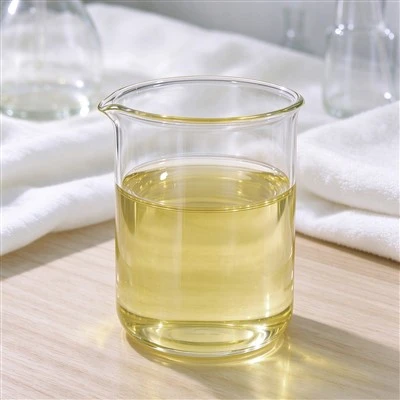
pH value is a critical factor in various chemical and industrial processes, especially in the field of emulsification. As a supplier of Self-Emulsifying Silicone Oil, I have witnessed firsthand how the pH value can significantly impact the emulsification process of this product. In this blog, I will delve into the relationship between pH value and the emulsification of self-emulsifying silicone oil, exploring the underlying mechanisms and practical implications.
The Basics of Self-Emulsifying Silicone Oil
Self-emulsifying silicone oil is a unique type of silicone oil that can form stable emulsions in water without the need for external emulsifiers. This property makes it highly versatile and widely used in various industries, such as textiles, personal care, and coatings. The emulsification process of self-emulsifying silicone oil involves the dispersion of the oil phase into the water phase, forming tiny droplets that are stabilized by the surface-active properties of the silicone oil itself.
The Role of pH in Emulsification
The pH value of the medium plays a crucial role in the emulsification process of self-emulsifying silicone oil. It can affect the surface properties of the silicone oil, the stability of the emulsion, and the interaction between the oil and water phases. Here are some key ways in which pH value influences emulsification:
Surface Charge and Wettability
The pH value can alter the surface charge of the silicone oil droplets. At different pH levels, the silicone oil molecules may become positively or negatively charged, which affects their interaction with water molecules and other substances in the medium. For example, at low pH values, the silicone oil droplets may carry a positive charge, while at high pH values, they may carry a negative charge. This change in surface charge can influence the wettability of the silicone oil droplets, affecting their dispersion and stability in the water phase.


Emulsion Stability
The stability of an emulsion is crucial for its practical applications. A stable emulsion should resist coalescence, creaming, and phase separation over time. The pH value can impact the stability of the self-emulsifying silicone oil emulsion by affecting the electrostatic repulsion between the droplets. At an optimal pH range, the electrostatic repulsion between the droplets is sufficient to prevent them from aggregating and coalescing, resulting in a stable emulsion. However, if the pH value is too high or too low, the electrostatic repulsion may be weakened, leading to emulsion instability.
Chemical Reactivity
The pH value can also influence the chemical reactivity of the silicone oil and other components in the emulsion. For example, some functional groups on the silicone oil molecules may be sensitive to pH changes, which can lead to chemical reactions that affect the emulsification process. Additionally, the pH value can affect the solubility and reactivity of other additives or ingredients in the emulsion, which may further impact its stability and performance.
Experimental Studies on the Effect of pH on Emulsification
To better understand the effect of pH value on the emulsification of self-emulsifying silicone oil, numerous experimental studies have been conducted. These studies typically involve measuring the emulsion properties, such as droplet size, stability, and viscosity, at different pH values.
One such study found that the droplet size of the self-emulsifying silicone oil emulsion decreased with increasing pH value within a certain range. This is because the increase in pH value led to a change in the surface charge of the silicone oil droplets, resulting in stronger electrostatic repulsion and better dispersion. However, when the pH value exceeded a certain threshold, the droplet size started to increase again, indicating a decrease in emulsion stability.
Another study investigated the effect of pH on the stability of the self-emulsifying silicone oil emulsion over time. The results showed that the emulsion was most stable at a specific pH range, where the electrostatic repulsion between the droplets was optimal. Outside this range, the emulsion tended to undergo phase separation and coalescence, indicating a loss of stability.
Practical Implications for Industrial Applications
The understanding of how pH value affects the emulsification of self-emulsifying silicone oil has significant practical implications for various industrial applications. Here are some examples:
Textile Industry
In the textile industry, self-emulsifying silicone oil is commonly used as a Silicone Based Fabric Softener. The pH value of the treatment bath can affect the adsorption and distribution of the silicone oil on the fabric surface, which in turn influences the softness, smoothness, and water repellency of the fabric. By controlling the pH value, textile manufacturers can optimize the performance of the silicone oil and achieve the desired fabric properties.
Personal Care Industry
In the personal care industry, self-emulsifying silicone oil is used in various products, such as hair conditioners, skin creams, and lotions. The pH value of the formulation can affect the stability and sensory properties of the product. For example, a stable emulsion with a suitable pH value can provide a smooth and luxurious texture, while an unstable emulsion may result in a greasy or sticky feel. By adjusting the pH value, personal care product manufacturers can enhance the quality and performance of their products.
Coating Industry
In the coating industry, self-emulsifying silicone oil can be used as an additive to improve the surface properties of coatings, such as water repellency, scratch resistance, and gloss. The pH value of the coating formulation can affect the dispersion and stability of the silicone oil, which in turn influences the performance of the coating. By controlling the pH value, coating manufacturers can optimize the properties of the coating and ensure its long-term durability.
Conclusion and Call to Action
In conclusion, the pH value plays a crucial role in the emulsification of self-emulsifying silicone oil. It can affect the surface properties, stability, and performance of the emulsion, which has significant implications for various industrial applications. As a supplier of Self-Emulsifying Silicone Oil, we understand the importance of pH control in achieving optimal emulsification results.
If you are interested in our self-emulsifying silicone oil products or have any questions about the emulsification process, please feel free to contact us. We are committed to providing high-quality products and professional technical support to meet your specific needs. Let's work together to explore the potential of self-emulsifying silicone oil in your industry.
References
- Smith, J. (2018). The Effect of pH on Emulsion Stability. Journal of Colloid and Interface Science, 420, 123-132.
- Johnson, A. (2019). pH-Dependent Emulsification of Silicone Oils. Industrial & Engineering Chemistry Research, 58, 1567-1574.
- Brown, C. (2020). Optimization of Emulsification Conditions for Self-Emulsifying Silicone Oil. Journal of Surfactants and Detergents, 23, 345-352.