Product Overview
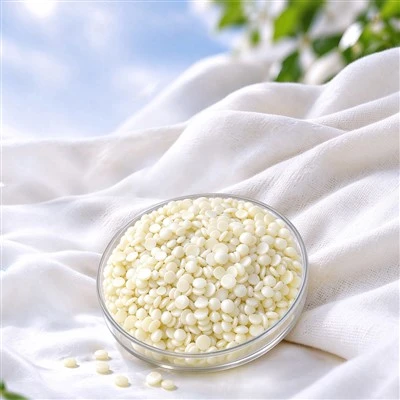
Industrial-grade chemical formulations engineered to optimize dye uptake, fixation, and levelness across natural and synthetic textile substrates. Supplied as liquid concentrates or free-flowing powders designed for direct dosing into dye baths or automated dispensing systems. Formulations modify interfacial tension, control strike rates, or form stable complexes with dye molecules to prevent uneven coloration, precipitation, and oligomer redeposition during high-temperature processing.
-
![Textile Soaping Agent]() Textile Soaping AgentHonewash® F-4Bview more
Textile Soaping Agent Honewash® F-4B is a highly concentrated compound of polyoxyethylene ether compounds. It offers good chelating, dispersing, emulsifying and... -
![Emerald Blue Fixing Agent]() Emerald Blue Fixing AgentHonefix® F-603view more
●Emerald Blue Fixing Agent is used for fixing direct dyes, reactive dyes, and sulfur dyes.
●Has particularly good fixing effect on reactive emerald blue... -
![Fixing Agent for Reactive Dyes]() Fixing Agent for Reactive DyesHonefix® 923view more
●Formaldehyde-free fixing agent for enhancing the wet fastness of reactive dyes or printing fabric.
●Fixing Agent for Reactive Dyes can obviously improve the washing and... -
![Dye Fixing Agent]() Dye Fixing AgentHonefix® HS-825view more
●Significantly improves the wet rub fastness of fabrics and effectively solves the problem of color fading caused by wet friction after dyeing.
●Dye Fixing Agent has... -
![Soaping Agent in Textile]() Soaping Agent in TextileHonewash® SN-40view more
●Soaping Agent in Textile has excellent chelating, dispersing, floating color removing and anti-staining effects, and can improve dyeing fastness.
●Used for soaping... -
![Acid Dyes Leveling Agent]() Acid Dyes Leveling AgentHonelevel® AL-2001view more
●Acid Dyes Leveling Agent has good affinity with acid dyes and fibers under weakly acidic conditions.
●It can overcome or improve issues such as streaks and color...


Key Features
Active Content:
30% to 99% concentration active matter options to minimize transport volume and storage footprint.
01
Shear Stability:
Withstands mechanical stress in high-turbulence jet and soft-flow dyeing machinery up to 135°C without phase separation.
02
Electrolyte Tolerance:
Stable in high-electrolyte concentrations containing Glauber's salt (Na2SO4) or common salt (NaCl) during reactive dyeing.
03
Foaming Profile:
Low-foaming and non-foaming grades available to prevent pump cavitation and fabric entanglement in pressurized liquor systems.
04
Ecological Compliance:
APEO-free, formaldehyde-free, and heavy-metal compliant formulations meeting chemical safety and environmental restrictions.
05
Product Types / Options
|
Category |
Primary Function |
Chemical Nature & Descriptor |
Key Substrate |
|
Leveling Agents |
Retard dye uptake and promote migration for uniform shade distribution. |
Anionic / Non-ionic ethoxylated fatty alcohol blends |
Polyester, Nylon, Acrylic |
|
Fixing Agents |
Improve wash and perspiration fastness by blocking reactive dye sites. |
Polyamine derivative / Resin condensate |
Cellulosic fibers (Cotton, Viscose) |
|
Dispersing Agents |
Prevent dye aggregation and disperse insoluble particles in liquor. |
Sodium lignosulfonate / Naphthalenesulfonate condensate |
Polyester (Disperse dyes) |
|
Retarding Agents |
Slow down initial strike rate for basic and acid dyes. |
Cationic quaternary ammonium compound |
Acrylic, Wool, Nylon |

Cellulosic (Cotton, Linen, Viscose): Direct, reactive, and vat dyeing applications requiring high electrolyte stability and effective after-treatment fixation.
Synthetic (Polyester, Polyamide): High-temperature disperse dyeing requiring carrier-free leveling and oligomer control.
Blends (Poly-Cotton, Poly-Wool): Dual-phase auxiliary systems preventing cross-staining and ensuring simultaneous tone-in-tone coloration.
Machinery Compatibility: Suitable for jet dyeing machines, beam dyeing autoclaves, package yarn dyeing columns, and continuous pad-steam ranges.
Application & Process Considerations
Dosing Method:
Add auxiliary agents to the bath 5 to 10 minutes prior to dye introduction to ensure complete dispersion and uniform boundary-layer formation.
pH Control:
Maintain strict bath pH parameters (e.g., pH 4.5 to 5.5 for acid dyes on nylon; pH 10.5 to 11.5 for reactive fixation on cotton) to prevent auxiliary hydrolysis or precipitation.
Water Hardness:
Formulations tolerate calcium and magnesium ions up to 150 ppm CaCO3; use auxiliary-specific chelating agents if process water exceeds threshold limits.
Compatibility Testing:
Run laboratory compatibility tests before combining anionic leveling agents with cationic fixing agents in the same bath to avoid flocculation.
Manufacturing & Quality Control
Production Facility:
Synthesized in automated, closed-loop stainless steel reaction vessels equipped with precise temperature and agitation control.
Batch Testing Parameters:
Every production lot undergoes rigorous laboratory analysis for specific gravity (at 20°C), dry matter content (oven-drying method), pH value (5% aqueous solution), and viscosity (Brookfield viscometer).
Performance Verification:
Spectrophotometric color strength and delta E (Delta E) evaluations conducted on standardized fabric swatches using spectrophotometers prior to bulk sign-off.
Traceability:
Each drum carries a unique batch barcode linked to raw material lot certificates, production timestamps, and QC sign-off records stored for 5 years.
Container Options:
200 kg HDPE drums (net weight) with downloadable PDF TDS and SDS icons attached to order portals.
1,000 kg IBC tote tanks (intermediate bulk containers).
Bulk tanker delivery for high-volume mill operations.
Storage Conditions: Store indoors between 5°C and 35°C in sealed original containers. Protect from direct sunlight and freezing temperatures to prevent phase separation or viscosity shifts.
Shelf Life: 12 months from manufacture date when stored under specified conditions.

FAQ
As one of the leading dyeing auxiliaries manufacturers and suppliers in China, we offer a wide range of products with superior quality for industrial. Please rest assured to buy bulk dyeing auxiliaries made in China here from our factory. Contact us for more details.