Product Overview
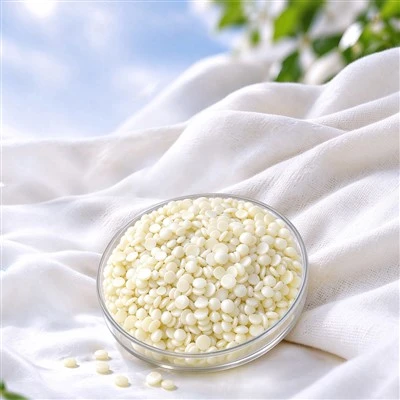
Textile functional agents are specialized chemical formulations applied during wet processing to modify the surface energy, thermal behavior, or biological resistance of synthetic, natural, and blended yarns and fabrics. Engineered for integration into standard pad-dry-cure or exhaust application lines, these agents bond with fibre surfaces to deliver targeted performance metrics without altering mechanical tensile strength.
-
![Anti-phenolic Yellowing Agent]() Anti-phenolic Yellowing AgentHonesoft® APYview more
Anti-phenolic Yellowing Agent Honesoft® APY is a universal anti-yellowing agent for textiles during storage, providing durable resistance to phenolic yellowing, especially... -
![Anti-bacterial Agent for Textile]() Anti-bacterial Agent for TextileHonesoft® S-7000view more
●Anti-bacterial Agent for Textile is suitable for the antibacterial finishing of various fibers.
●High-efficiency antibacterial property: exhibits inhibitory effect on... -
![Fabric Weighting Agent]() Fabric Weighting Agent●No sublimation occurs under the high-temperature heat-setting condition of 180℃ for chemical fibers.view more
●Fabric Weighting Agent is used in the finishing process. After treatment, the fabric... -
![Anti-ozone Agent]() Anti-ozone AgentHonesoft® V8-2 / V9 / QL-838view more
●Cationic softener with high adsorption.
●Fabrics or clothes (denim) after finishing have good ozone fading resistance.
●Anti-ozone Agent delivers a... -
![Dispersing Agent in Textile]() Dispersing Agent in TextileHonsoft® A-40view more
●Non-ionic property, used in various processes requiring dispersion performance.
●Macromolecular dispersant with excellent dispersion performance.
●Improves...


Key Features
Cross-Linking Efficiency:
Forms covalent or durable hydrogen bonds with cellulose, polyester, and polyamide hydroxyl or amide groups, retaining performance past 50 industrial launderings.
Low Yellowing Threshold:
Operates within optimized curing windows (150°C to 170°C) to prevent thermal discoloration on white and pastel substrates.
Process Compatibility:
Non-ionic and weak cationic variants minimize bath precipitation risks when co-applied with resin finishes or fluorocarbon water repellents.
Substrate Penetration:
Low surface tension formulations wet dense woven and knitted structures uniformly at pick-up rates between 60% and 80%.
Product Types / Options
Moisture Management Agents (Hydrophilic):
Modified polyester-polyether blocks that reduce static buildup and lower contact angles on synthetic fibres to enhance wicking and quick-dry performance.
Antimicrobial & Odor-Control Agents:
Silver-ion and quaternary ammonium silane complexes that inhibit bacterial growth on activewear and medical textiles.
Flame Retardant Systems:
Phosphorus-nitrogen and organophosphorus synergists formulated for cellulosic and blended protective workwear, meeting vertical burn standards.
Hand-Modifier Softeners:
Amino-silicone emulsions providing compression resilience and surface lubricity for high-speed sewing operations.

Polyester & Nylon: Athletic apparel, outdoor technical shells, automotive seating fabrics.
Cotton & Cellulosics (Viscose/Tencel): Medical drapes, institutional linens, daily casual wear.
Blends (Poly-Cotton / Poly-Wool): Industrial workwear, uniform fabrics, home upholstery.
Application & Process Considerations
Application Method:
Pad-dry-cure (padding mangle at 2-4 bar pressure, drying at 110°C, curing at 150°C-170°C for 60-90 seconds) or Exhaust method (pH 4.5-5.5, 80°C-90°C for 30 minutes).
Bath Preparation:
Pre-dilute the agent in 3x warm water (30°C-40°C) under agitation before adding to the main liquor containing auxiliary wetting agents.
Water Quality Sensitivity:
Hard water ions exceeding 150 ppm calcium carbonate require the addition of 1 g/L chelating agent to prevent bath destabilization.
Storage Stability:
Store in sealed high-density polyethylene drums between 5°C and 35°C with a 12-month shelf life. Avoid direct freezing and prolonged exposure to ultraviolet radiation.
Synthesis & Reaction Monitoring: Produced via controlled batch polymerization and emulsification reactors equipped with automated temperature and torque logging.
Viscosity & Density Testing: Every batch is tested using rotational viscometers and hydrometers at 25°C to maintain strict solid content tolerances within plus-minus 0.5 percent.
Application Simulation: Standardized lab-scale padding and thermal curing trials are conducted on reference cotton and polyester knit fabrics per batch to verify dry pick-up and functional performance.
Regulatory Screening: Formulations are screened via gas chromatography-mass spectrometry and inductively coupled plasma optical emission spectrometry to ensure zero presence of restricted alkylphenol ethoxylates, formaldehyde, heavy metals, and phthalates, aligning with chemical restriction limits.

Packaging & Supply
Container Options:
120 kg and 200 kg high-density polyethylene drums along with 1,000 kg Intermediate Bulk Containers.
Logistics & Transport:
Classified as non-hazardous chemicals for standard ocean and land freight. Pallets are stretch-wrapped and edge-protected for transit stability.
Lead Time:
Standard production cycles take 7 to 12 business days for quantities under 10 metric tons.
FAQ
As one of the leading textile functional agent manufacturers and suppliers in China, we offer a wide range of products with superior quality for industrial. Please rest assured to buy bulk textile functional agent made in China here from our factory. Contact us for more details.
Denim anti ozone paste softener, Anti bacterial Agent For Textile, Anti ozone Agent