Product Overview
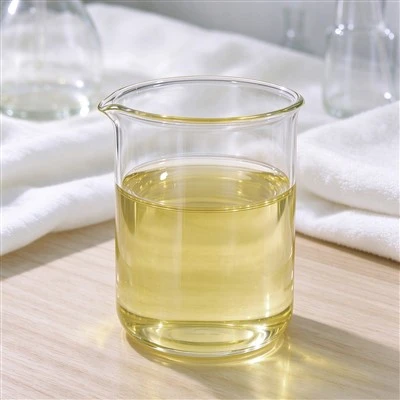
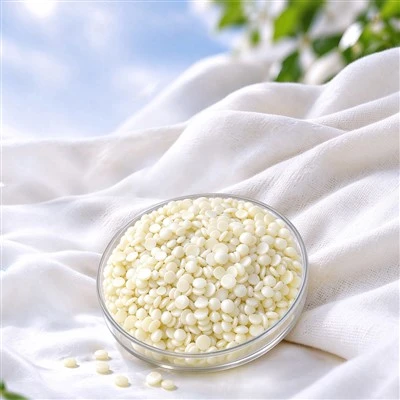
Industrial textile softeners are specialized chemical formulations applied during wet processing to modify the surface friction of fibers, yarns, and woven or knitted fabrics. Supplied as concentrated liquid emulsions or flakes, these agents alter the handfeel—imparting drape, softness, resilience, and surface smoothness—while ensuring compatibility with subsequent resin finishing or dyeing processes.
-
![Ultra-Soft Softener]() Ultra-Soft SoftenerHonesoft® QL-532view more
Honesoft® QL-532 is a cationic ultra-soft softener oil supplied as a light-yellow transparent liquid. Developed for cotton, terry cloth, denim and similar fabrics, it... -
![Cationic Fluffy Textile Softener]() Cationic Fluffy Textile SoftenerHonesoft® QS-315view more
Cationic Fluffy Textile Softener Honesoft® QS-315 is a cationic fluffy textile softener specially developed for pure cotton and its blended fabrics, supplied as... -
![Cotton Fabric Softener]() Cotton Fabric SoftenerHonesoft® QS-CWSview more
●Cationic Fabric Softener imparts the fabric with a soft and fluffy hand feel, and the fluffiness is particularly excellent.
●Low yellowing.
●AEEA-free. -
![Cationic Softener for Textile]() Cationic Softener for TextileHonesoft® QS-107Bview more
●Cationic Softener for Textile delivers a very soft and smooth hand feel.
●High whiteness, low yellowing.
●Anti-phenolic yellowing grade 4-5.
●High cost... -
![Fluffy Softener]() Fluffy SoftenerHonesoft® QS-140Dview more
●Fluffy Softener delivers a very soft and fluffy hand feel.
●Suitable for napping and sueding finishing of fabrics.
●Low yellowing.
●Applicable to dipping... -
![Eco-friendly Softener]() Eco-friendly SoftenerHonesoft® QS-118Aview more
●Eco-friendly Softener delivers a very soft and fluffy hand feel, effectively enhancing the fabric’s touch and wearing comfort, creating a high-quality user... -
![Cationic Softener for Cotton Fabrics]() Cationic Softener for Cotton FabricsHonesoft® QS-139view more
●Cationic Softener For Cotton Fabrics delivers a very soft and smooth hand feel.
●Low yellowing.
●Good anti-phenolic yellowing performance.
●Can be... -
![Cheap Softener]() Cheap SoftenerHonesoft® QS-1058view more
●Cheap Softener delivers a very soft, fluffy and thick hand feel.
●High whiteness.
●Low yellowing.
●Good anti-phenolic yellowing performance.
●High... -
![Anti Static Fabric Softener]() Anti Static Fabric SoftenerHonesoft® QS-DCSview more
●Anti-static Cationic Softener has extremely excellent soft, smooth hand feel.
●Can be dissolved at low temperature (water temperature above 25°C).
●Excellent... -
![Superior Softness Cationic Softener]() Superior Softness Cationic SoftenerHonesoft® QS-432view more
●Superior Softness Cationic Softener provides a full and fluffy texture, enhancing the fabric’s three-dimensional sense.
●Superior softness.
●AEEA-free. -
![Hydrophilic Softener for Textiles]() Hydrophilic Softener for TextilesHonesoft®QL-570view more
●Hydrophilic Softener for Textiles can significantly improve the hand feel of pure cotton and its blended fabrics with soft and smooth hand feel.
●Excellent... -
![Cationic Softener with Dry Non-Greasy Hand Feel]() Cationic Softener with Dry Non-Greasy Hand FeelHonesoft® QL-541view more
●Cationic Softener with Dry Non-Greasy Hand Feel delivers a vry and non-greasy hand feel.
●Excellent hydrophilicity.
●Soluble at room temperature...


Key Features
Active Content Range:
20% to 40% solid content options formulated for direct dilution or metering systems.
01
Thermal Stability:
Stable up to 180°C to 200°C during high-speed tentering and heat-setting operations.
02
Shear Stability:
Resists high mechanical stress in jet dyeing machines and continuous pad applicators up to 3,000 rpm.
03
Electrolyte Resistance:
Tolerates hard water up to 300 ppm CaCO3 and low-concentration anionic residues without precipitation or oil spotting.
04
Curing Behavior:
Low-temperature crosslinking options available to reduce thermal energy consumption in finishing ranges.
05

Cationic Softeners (Fatty Acid Amides): Delivers a rich, slippery, and heavy handfeel on cellulosics. Exhibits strong fiber substantivity through electrostatic attraction but carries a moderate risk of shade alteration on direct dyes.
Macro-Emulsion Silicone Softeners: Imparts extreme surface smoothness and bounce. Suitable for cotton knits and modal fabrics requiring high elasticity and crease recovery.
Micro-Emulsion Silicone Softeners: Penetrates deep into the yarn core, providing durable internal softness and excellent wash fastness without surface films.
Hydrophilic / Reactive Softeners: Modified silicone structures containing polyether segments that preserve moisture absorption and wicking properties in terry towels and activewear.
Non-Ionic Softeners: Used primarily as lubricating agents or antistatic co-additives with minimal impact on fabric shade or yellowing index.
Suitable Fibres & Applications
Cellulosic Fibres (Cotton, Viscose, Tencel):
Utilized in pad-dry-cure (15 to 30 g/L) and exhaust methods (1.0 to 3.0 % o.w.f.) to eliminate harsh handfeel, reduce cutting needle friction, and improve dimensional stability.
Synthetic Fibres (Polyester, Nylon, Acrylic):
Applied to reduce static buildup, prevent pilling, and impart a silky drape to filament yarns and woven apparel.
Blended Fabrics (Poly-Cotton, Poly-Viscose):
Balances surface slip and moisture transport, preventing the static cling common in synthetic blends.
Terry Towels & Home Textiles:
Focuses on hydrophilic block silicones to maximize water absorption rates while maintaining fluffiness after tumble drying.
Application & Process Considerations
Bath pH Control: Maintain application bath pH between 5.0 and 6.5 using acetic acid buffer systems. Alkaline conditions risk breaking silicone emulsions, leading to roller deposition and machine sticking.
Water Quality Control: Pre-treat process water exceeding 200 ppm hardness with chelating agents to prevent insoluble calcium-surfactant complexes, complemented by downloadable water hardness tolerance datasheets available upon technical inquiry.
Order of Addition: Dilute softeners in warm water (35°C to 40°C) under continuous low-shear agitation before adding to the main liquor tank. Never pour concentrated softener directly into an uncirculated bath.
Drying & Curing Parameters: Ensure uniform expression in pad mangers (pick-up rate 65% to 80%). Dry at 110°C and cure at 150°C to 170°C for 30 to 60 seconds to achieve optimal molecular orientation on the fiber surface.
Emulsification Process: Produced via high-pressure homogenization (operating at 30 to 50 MPa) to achieve uniform droplet size distribution (d50 < 120 nm for micro-emulsions), preventing phase separation during prolonged storage.
Batch Testing Protocols: Every production batch undergoes raw material purity analysis, refractive index measurement, pH determination, dynamic viscosity testing (Brookfield viscometer at 25°C), and centrifugal stability testing (3,000 rpm for 30 minutes).
Standard Compliance: Formulations are manufactured to meet general international export benchmarks for chemical safety, heavy metal restrictions, and ecological safety, supported by downloadable digital compliance packages.

Packaging & Supply
Container Specifications:
200 kg high-density polyethylene (HDPE) bung drums, 1,000 kg intermediate bulk container (IBC) composite totes, or customized bulk tanker delivery.
Digital Documentation Support:
Downloadable PDF packages including Technical Data Sheets (TDS), Safety Data Sheets (SDS), and batch-specific analysis certificates accessible instantly via our digital dispatch portal upon order fulfillment.
Storage Stability:
Store in original sealed containers between 5°C and 35°C. Protect from direct sunlight and freezing temperatures. Shelf life is 12 months from the date of manufacture.
Logistics & Safety:
Classified as non-hazardous for land, sea, and air freight transport. Refer to the specific safety documentation for industrial handling gear recommendations.
FAQ
As one of the leading textile softener manufacturers and suppliers in China, we offer a wide range of products with superior quality for industrial. Please rest assured to buy bulk textile softener made in China here from our factory. Contact us for more details.