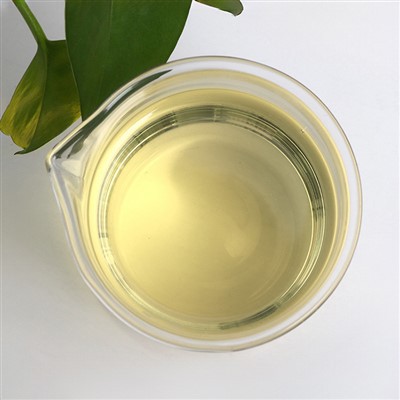
While appearance is not the sole determinant of performance in the application of textile chemicals, it is a crucial basis for rapid identification and preliminary quality assessment during production and use. The appearance characteristics of textile pretreatment agents are closely related to their composition, preparation process, and application scenario. By observing factors such as color, transparency, viscosity, and dispersion, their stability, compatibility, and applicable conditions can be predicted to some extent, providing a reference for process control.
Most common textile pretreatment agents are in liquid form at room temperature, which aligns with their requirement to perform wetting, penetration, and reaction in an aqueous system. Liquid form facilitates metering, transportation, and uniform application, and also allows for rapid mixing with other auxiliaries or process water. In terms of color, most pretreatment agents are colorless to pale yellow transparent or semi-transparent liquids, stemming from their main components being water-soluble surfactants, enzyme preparations, or complex systems of low-color inorganic salts and organic acids. If obvious yellowish-brown, turbidity, or suspended particles appear, it may indicate raw material oxidation, microbial growth, or poor dispersion. Filtration or re-formulation is necessary before use to prevent nozzle clogging or affecting uniformity of action.
Viscosity is another significant appearance characteristic. Conventional pretreatment agents, being primarily water-based, have viscosity close to water or in the tens of millipascals per second range, exhibiting good flowability and facilitating uniform distribution in padding, overflow, or spraying equipment. Some composite pretreatment agents containing polymers or thickeners can have moderately increased viscosity to prolong residence time on the fiber surface and enhance impurity removal. However, their viscosity should be controlled within the process's allowable range to avoid uneven application or residue buildup due to insufficient flowability.
Under static or low-temperature conditions, some pretreatment agents may exhibit slight stratification or crystal precipitation, often caused by differences in solubility or temperature sensitivity. High-quality products should remain homogeneous and stable within the specified storage temperature range, without visible phase separation or precipitation. Slight stratification, if quickly restored to homogeneity after stirring, generally does not affect performance; however, recurring stratification requires review of formulation compatibility or storage conditions. Furthermore, low-foaming pretreatment agents produce less foam during stirring or application; this visual characteristic reflects not only their defoaming performance but also their direct correlation with subsequent washing efficiency.
In general, the appearance characteristics of textile pretreatment agents include morphology, color, transparency, viscosity, and dispersion stability. These are not only intuitive quality indicators but also auxiliary indicators for judging their suitability and stability. Standardized observation and recording of this appearance information helps to promptly identify anomalies in production and application, ensuring the smooth operation of the pretreatment process and the achievement of expected results.