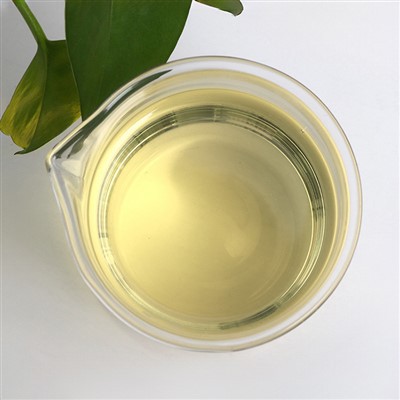
In the textile finishing system, the application process of softeners directly affects the uniformity, durability, and final wearability of the finishing effect. As an important auxiliary agent that improves fabric feel, reduces the coefficient of friction, and also provides antistatic and fluffy effects, its application requires rigorous process design and control to ensure the desired quality is achieved under different fiber materials and product structures.
The process flow typically begins with confirmation of the pretreatment state. Before entering the softening finishing stage, the fabric should have undergone desizing, scouring, bleaching, or dyeing processes, and residual chemicals and impurities must be thoroughly washed away to avoid adverse reactions with the softener or affecting the uniformity of adsorption. For greige or finished fabrics requiring softening finishing, their moisture content and pH value must be tested to ensure they are within the allowable range for the process, avoiding a decrease in softener performance or fiber damage due to unsuitable acidity or alkalinity.
Preparing the softening solution is a crucial step in the process. Select the appropriate type of softener based on fiber type and desired hand feel characteristics. For example, cationic softeners are suitable for cotton and viscose, while nonionic softeners are mostly used for wool and silk. For synthetic fibers, a compound product with both lubricating and antistatic functions can be selected. Accurately measure the softener according to the process formula and add it to water at a suitable temperature. Stir at low speed until uniformly dispersed. If necessary, add a pH adjuster or penetrant to improve the stability and penetration efficiency of the working solution. The bath ratio should be controlled to balance uniformity and economy; too high a ratio increases water consumption, while too low a ratio easily leads to concentration gradients and uneven distribution.
The application process is divided into two categories based on the production mode: impregnation and padding. Impregnation is mostly used in batch production. The fabric is fully immersed in a softening solution at a certain temperature and held for a specified time, allowing the auxiliaries to fully penetrate and form an adsorption layer on the fiber surface. Afterward, it undergoes dehydration or padding, controlling the liquid retention rate within a suitable range, before proceeding to the drying and heat treatment stages. The padding process is suitable for continuous production lines. The fabric passes through a padding tank where the softener adheres evenly. Precise adjustment of the roller pressure and machine speed is crucial to ensure uniform film thickness and prevent edge-to-center variations and unevenness.
Drying and baking are critical steps determining the durability of the softener. Low-temperature drying removes most of the moisture, preventing migration or volatilization of the softener due to direct high temperatures. Subsequent baking, conducted at a set temperature and time, promotes cross-linking or film formation between the softener and the fiber surface, improving wash resistance and hand feel stability. Different softeners have varying heat resistance; process parameters must be optimized based on their thermal decomposition curves to prevent scorching or yellowing.
Post-treatment includes cooling, inspection, and packaging. Cooling should be gradual to avoid fabric deformation or changes in softener distribution caused by temperature differences. Inspection confirms compliance through hand feel evaluation, friction coefficient measurement, and color difference detection. Qualified products are packaged and stored according to requirements to prevent compression and contamination.
Overall, the process of textile softener production covers pretreatment confirmation, working solution preparation, precise application, heat setting, and finished product inspection. Each step is closely linked and requires parameter optimization based on fiber characteristics and equipment conditions in order to achieve efficient, low-consumption, and environmentally friendly production goals while ensuring quality.