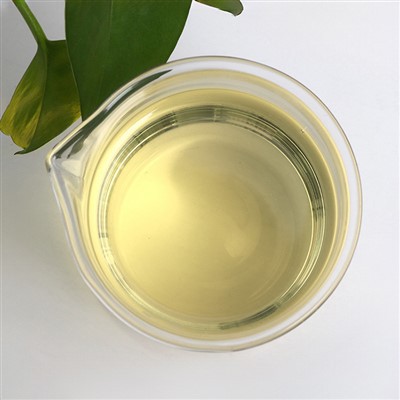
In the textile finishing process, the quality of softeners directly determines the hand feel, comfort, and functional durability of fabrics. Quality control must be implemented throughout the entire process, from research and development, production, storage, transportation, and application. As a fine chemical product primarily composed of surfactants and containing multiple functional components, the quality stability of softeners not only affects the consistency of finishing effects but also relates to production controllability and end-customer satisfaction.
Raw material inspection upon arrival is the starting point for quality control. The main components of softeners include cationic, nonionic, or amphoteric surfactants, as well as auxiliary ingredients such as thickeners, preservatives, and fragrances. Raw materials from different sources vary in purity, molecular weight distribution, and impurity content. A strict physicochemical index testing system should be established, including indicators such as active ingredient content, pH value, viscosity, turbidity, and moisture content. Batch stability tracking should be conducted for key raw materials to prevent raw material fluctuations from being transmitted to the finished product.
Quality control during the production process focuses on formula execution and process parameter locking. Ingredients must be precisely measured according to the predetermined proportions to avoid performance deviations due to weighing errors. Temperature, stirring rate, and time should be controlled during mixing and emulsification to ensure a homogeneous system without phase separation or excessively high local concentrations. For components susceptible to heat or shear, such as modified silicone or microemulsion systems, the prescribed feeding sequence and process window must be strictly followed to prevent demulsification, gelation, or degradation of active ingredients. Intermediate and finished products require sampling and testing to verify appearance, viscosity, solid content, ionicity, and performance comparison with standard samples, ensuring traceability of each batch's quality.
Finished product inspection should cover key performance indicators and suitability verification. Routine items include appearance transparency or milky white uniformity, pH value, active ingredient content, electrolyte stability, and storage stability (e.g., stratification after high or low temperature storage). For suitability with different fibers and processes, small-sample hand feel evaluation, wash resistance testing, and antistatic performance assessment can be conducted to confirm that the product's performance in practical applications meets design requirements. For export or high-end customer orders, environmental and safety testing must be conducted according to relevant standards to ensure the absence of prohibited substances and compliance with limits on restricted substances.
Storage and logistics are also crucial components of quality assurance. Softeners should be stored in a cool, dry, and well-ventilated environment, avoiding direct sunlight and extreme temperatures to prevent chemical degradation or changes in physical properties. During transportation, severe vibration and inversion must be prevented to avoid emulsion breakdown or sedimentation; the integrity of the packaging should be checked during loading and unloading to prevent leakage and contamination. Establishing a first-in, first-out (FIFO) system and regular inventory checks allows for the timely removal of products nearing their expiration date or exhibiting abnormalities, reducing quality risks.
Continuous improvement in quality control relies on data accumulation and analysis. Tracking trends in key parameters through Statistical Process Control (SPC), combined with customer feedback and process changes for causal analysis, allows for continuous optimization of formulations and processes. Simultaneously, introducing automated batching and online monitoring systems helps improve metering accuracy and process consistency, reducing human error.
Overall, quality control of textile softeners is a systematic project covering raw materials, production, inspection, storage, transportation, and improvement. Only by implementing rigorous standards and monitoring at every stage can we ensure that products consistently perform their soft, smooth, and functional enhancement functions in application, providing reliable guarantees for textile finishing and continuously improving the company's market competitiveness and customer trust.